The term air pollution refers to the mix of hazardous substances from natural and human-made sources. A few sources of human-made air pollution include:
- Vehicle emission
- Natural gas
- Fuel oils
- Manufacturing by-products
- Coal-fueled power plants
- Chemical production
Things like smoke from wildfires and methane from decomposing organic matter fall under the umbrella of natural sources of air pollution. In addition to the effects on the natural world, air pollution can have a substantial impact on our health. One area where you might see that impact is your sleep apnea.
How Air Pollution Impacts Your Sleep Apnea
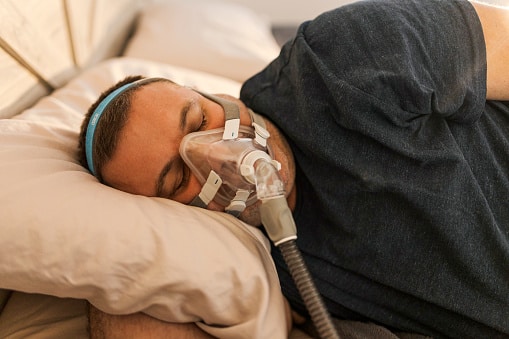
A 2018 study examined the impact of environmental conditions on the severity of obstructive sleep apnea (OSA). In the study, researchers enrolled 63 participants in an overnight sleep study. Each participant collected data on the temperature, humidity and amount of particulate matter (a mixture of airborne solids or liquid droplets that are harmful if inhaled) less than 10 μm in diameter with a personal air sampling and HOBO temp/RH data logger.
The study found a couple of indicators that your environment impacts your OSA symptoms:
- An elevation in 1-year average particulate matter concentration caused an increase in the number of breathing pauses, shallow breaths and abnormal breathing events (reduction in airflow and oxygen, etc.)
- Higher temperatures contributed to poorer sleep quality
While increased temperatures aren’t necessarily caused by rising global temperatures, they may be more likely to arise from air conditioning or heating in your home, the rise in air pollutants does appear to aggravate OSA symptoms. The study did not establish that air pollution contributed to the development of OSA; only that it increased its severity.
What Does This Mean for My Sleep Apnea Treatment?
The air quality in Beaumont is usually good, though symptoms may shift if you visit or move to more polluted areas. Despite the impact of air pollution, a continuous positive airway pressure (CPAP) machine is the standard treatment for OSA. In addition to treating the condition itself, there are ways you can continue to ensure good indoor air quality:
- Open the windows to increase airflow (unless you live near a factory or other high-pollution area)
- Avoid strong cleaners and air fresheners
- Vacuum and dust regularly
- Install smoke and carbon monoxide detectors
- Install HVAC filters or use portable air cleaners
If you’re experiencing sleep apnea symptoms and want to schedule a sleep study or treatment consultation, contact Southeast Texas Ear, Nose & Throat, LLP today.